It’s the End of the World as We Know It (And I Feel Fine) by R.E.M.
Some Stats-
Total Minutes: 24:51:55
Total Artists: 209
Top Artists-
The Police: 15 posts
The B-52s: 13 posts
Steely Dan: 11 posts
The Black Keys: 7 posts
Thomas Dolby: 6 posts
:format(jpeg):mode_rgb():quality(90)/discogs-images/R-637369-1255145866.jpeg.jpg)

an audio diary of my 366 favorite songs
It’s the End of the World as We Know It (And I Feel Fine) by R.E.M.
Some Stats-
Total Minutes: 24:51:55
Total Artists: 209
Top Artists-
The Police: 15 posts
The B-52s: 13 posts
Steely Dan: 11 posts
The Black Keys: 7 posts
Thomas Dolby: 6 posts
Losing a Whole Year by Third Eye Blind
As with all Jenkins-written 3EB songs, there are layers of meaning in play. Jenkins himself was an English major at UC-Berkley, and his knowledge classic literature is not lost in his lyrics. Numerous fan theories believe ‘Losing a Whole Year’ correlates strongly to the The Great Gatsby, a story rich in the American dream and lost romances.
https://culturedvultures.com/losing-whole-20-years-look-back-third-eye-blinds-debut-album/
:format(jpeg):mode_rgb():quality(90)/discogs-images/R-6401047-1594333453-6878.jpeg.jpg)
Don’t Come Around Here no More by Tom Petty
This song was originally written by David A. Stewart (of the Eurythmics) as a song for Stevie Nicks to record. It was intended to be a message from Stevie to Joe Walsh (of The Eagles and James Gang), with whom she had a tumultuous (and often unhealthy, drug- and alcohol-fueled) relationship. Stevie has since said in interviews that Joe Walsh was the love of her life and that she wishes she’d married him. However, Stevie decided not to record the song, so Stewart gave it to Tom Petty, for whom it became a hit.
https://www.discogs.com/Tom-Petty-And-The-Heart-Breakers-Dont-Come-Around-Here-No-More/master/74334
Draggin’ The Line by Tommy James
Like many famous songs, this was not considered a hit at first. Says James: “The interesting thing about ‘Draggin’ the Line’ is it was originally the B-side, it was the flip-side of a record called ‘Church Street Soul Revival’ that I had out in 1970. And we put the record out, and the B-side got as much airplay as the A-side, and then finally more airplay. And so we could tell that radio wanted to go with ‘Draggin’ The Line.’ So we went into the studio and threw horns on it, and remixed it with more emphasis on the groove, and re-released it then as an A-side in 1971, and it went #1.”
https://www.songfacts.com/facts/tommy-james/draggin-the-line
:format(jpeg):mode_rgb():quality(90)/discogs-images/R-1326348-1506889026-3878.jpeg.jpg)
When the World is Running Down You Make the Best of What’s Still Around by The Police
Always read the comments:
My Interpretation about the song, for what i got is about the last man on earth.
and about trying to keep sanity by trying to keep a routine..
might also be a metaphor for being misunderstood or an outcast on the actual society that keeps sinking down and down.. also depression and not being able to make contact with the “outside world”. or even a person still attached to the “old ways” that doesn’t feel the need to get new experiences and likes his world the way it is.
about the several lyrics parts:
“Plug in my M.C.I. to exercise my brain”
>for those who didn’t get it, the M.C.I. acronym refers to Music Center Incorporated.. so in this song Sting is refering to a multitracker recorder..
“Make records on my own can’t go out in the rain”
>this might be due the nuclear winter the survivors of a nuclear blast will be facing.
“Pick up the Telephone, I’ve listened here for years
No-one to talk to me I’ve listened here for years”
>trying to use the radio to keep track of any people in the same situation.. not getting much luck. but he still has hope and keeps doing it even after years and years of silence.
“When I feel lonely here, don’t waste my time with tears
I run ‘Deep Throat’ again it ran for years and years
Don’t like the food I eat, the cans are running out
Same food for years and years I hate the food I eat”
>at this time he tries to forget about what’s going on and to delude himself by trying to recreat things the used to do.
also, he starts to get sick of eating the same food over and over again, something that usually happen to depressed people.
and that’s pretty much it.. a nostalgic song.
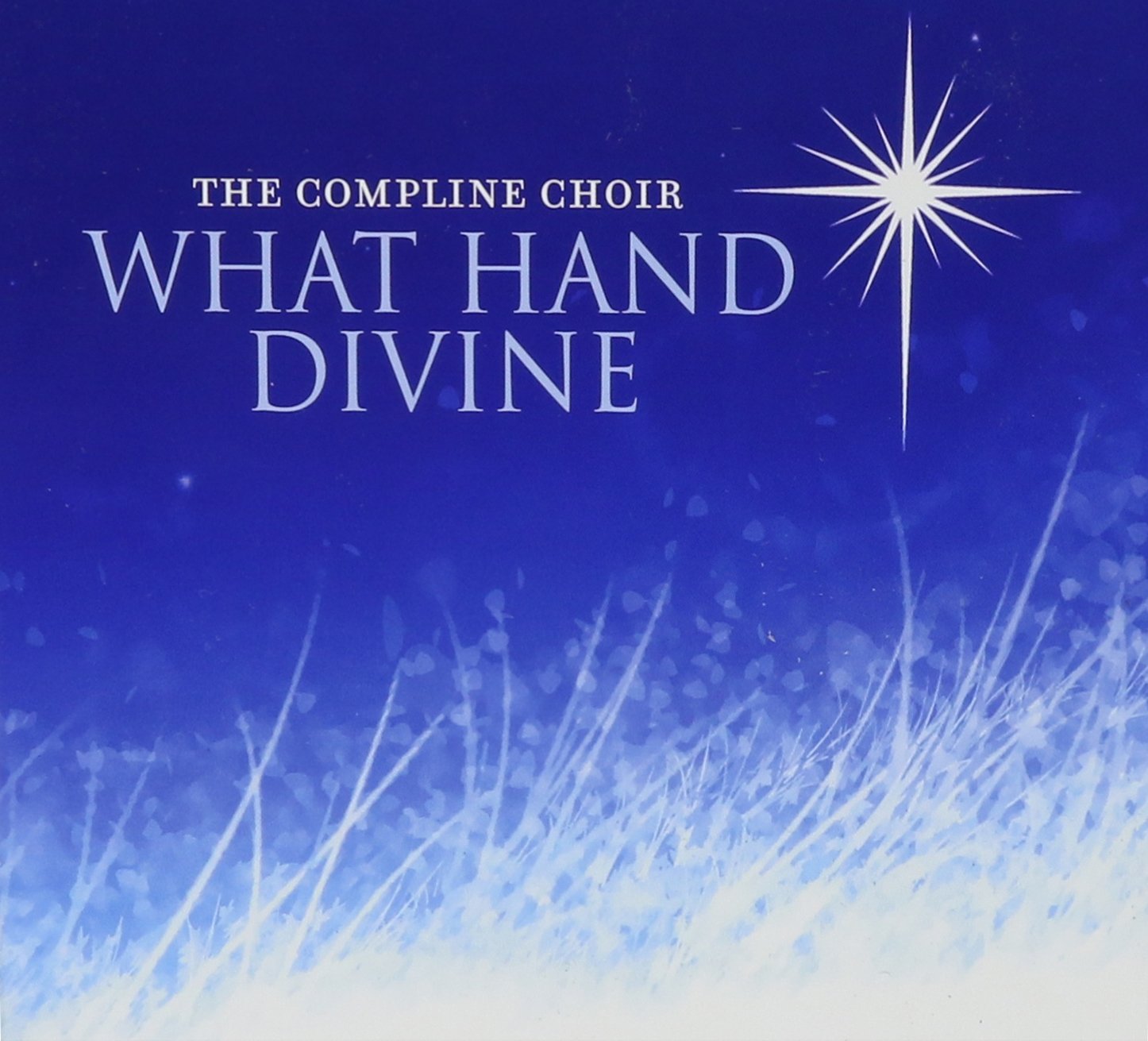
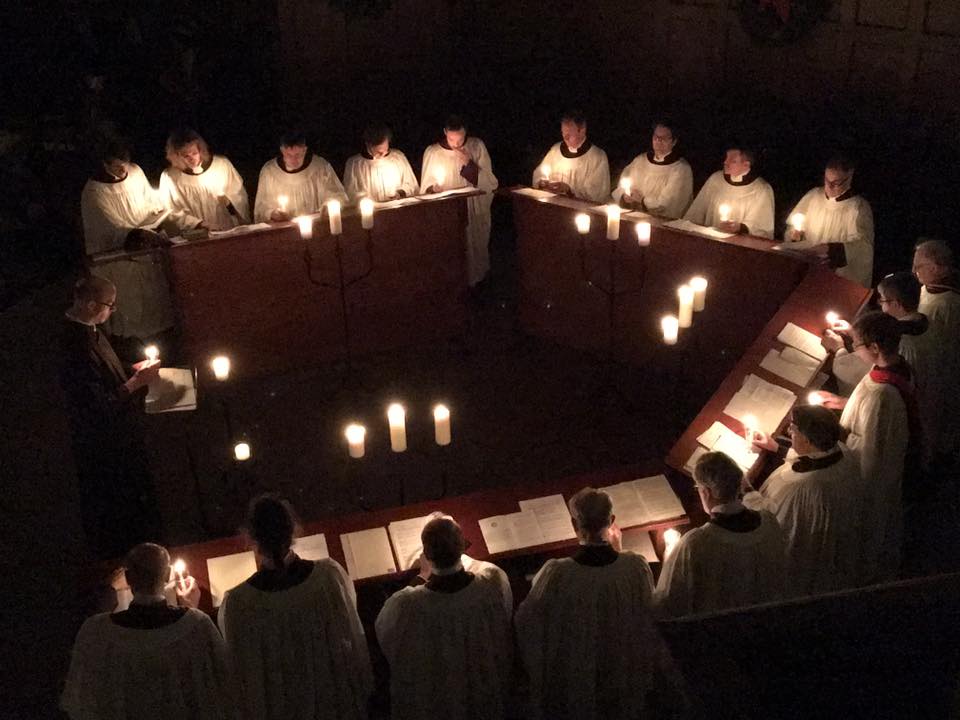
Nunc dimittis (Marilyn setting) by Peter Hallock sung by The Compline Choir
From Luke 2:22-40, we are handed one of the great canticles—a Biblical text arranged as poetry—which we know as the Nunc dimittis or Song of Simeon. This canticle, the second sung at Evening Prayer, was originally appointed for use at Compline, itself a liturgy designed to prepare one for the “little death” (sleep during the night) and also death itself. For this work, Hallock composed a simple hymn-tune setting. Traditionally, the Compline Choir uses this setting from the Fourth Sunday of Advent through the Epiphany, and again on The Feast of the Presentation.
https://complinechoir.org/recordings/what-hand-divine/lyrics/
Born on a New Day by John David arr. Peter Knight sung by The Compline Choir
This work was made famous by the King’s Singers, a group that has inspired the Compline Choir to strive for superb music-making and performance of meaningful, challenging repertoire. The King’s Singers have sung this work to countless audiences and it was featured by the Mormon Tabernacle Choir when they were joined by the King’s Singers for a Christmas special.
https://complinechoir.org/recordings/what-hand-divine/lyrics/
Under My Thumb by The Rolling Stones
The unusual percussion on this track is Brian Jones playing the marimbas. Their original lead guitarist, Jones played a variety of instruments to create some innovative sounds for the Stones, who weren’t as guitar focused in their early years. Nick Reynolds, who co-produced the documentary Rolling Stone: Life and Death of Brian Jones, considers it some of Jones’ best work. “He makes the arrangement that turns this song into a timeless classic,”
https://www.songfacts.com/facts/the-rolling-stones/under-my-thumb
:format(jpeg):mode_rgb():quality(90)/discogs-images/R-1737884-1523006473-2876.jpeg.jpg)
Es Ist Ein Ros Entsprungen arr. by – Jan Sandström Composed by Michael Praetorius
performed by Dale Warland Singers
You must turn this up and use headphones to get the full effect of this arrangement.
“Lo, How a Rose E’er Blooming” is an easy carol to write about, because I do not have to convince you it is beautiful. Pull up any choral recording, slide over to the penultimate phrase—“amid the cold of winter”—and listen hard to that last word. Between the first and second syllable of winter, the minor chord blossoms into major.
https://www.theatlantic.com/entertainment/archive/2015/12/lo-how-a-rose-eer-blooming/421518/
[Many] versions are lovely, but they’re not exactly justifying corporeal existence. For that, we have to turn to the Swedish composer Jan Sandström’s more recent choral arrangement… Every harmony has been taken from Praetorius’s original and extended, embellished for maximum ethereality. I’ve heard it said that, when written music succeeds, you enter a single life-world designed by the composer and awakened by the performers. We don’t only enter Sandström’s version, though. He gives us time to wander around, look at the decor, and settle into a sofa made of well-tuned vowels.
:format(jpeg):mode_rgb():quality(90)/discogs-images/R-6893693-1428973913-5230.jpeg.jpg)
 Song a Day 2020
:format(jpeg):mode_rgb():quality(90)/discogs-images/R-1011519-1367774471-4243.jpeg.jpg)