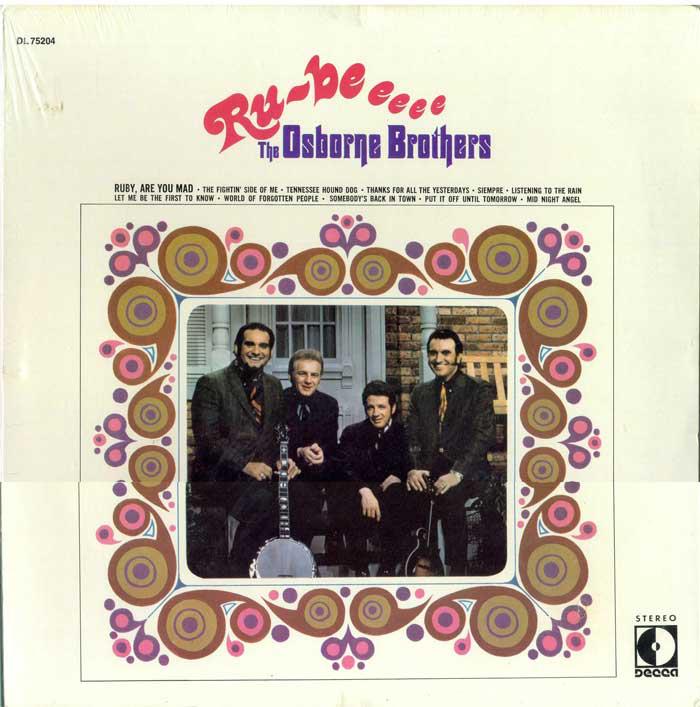
Like many of my favorite tunes, it goes nowhere harmonically, staying on the same chord all the way. So it’s not the shifting colors of the chord progression that draw you in, it’s the musicianship, the flat out NASCAR speed they perform at, and brother Sonny Osborne’s almost psychedelic filigrees on banjo that carry it home. The song is worthy, if slightly inscrutable — is it a love song or a potential murder ballad?
Many were already surprised that the Black Keys won the Best Breakthough Video VMA in September 2010 for this song, eight years after releasing their first album. MTV then proceeded to completely screw up the prize when the duo were presented with a trophy that said “Black Eyed Peas” instead of their own name.
This either samples or interpolates the “Peter Gunn Theme,” which Henry Mancini wrote for the 1958 TV series. Mancini has a writer credit on “Planet Claire” along with every member of The B-52s.
The 5th Exotic leaves no stone unturned psycho-acoustically, not to mention musically. With dub, jazz, funk, flamenco and blues all explored through the lens of early-noughties trip-hop and garagey beats, it really is an exploration of what can be done when you combine samples of acoustic music, electronic beats and fresh recordings, many of which Will Holland played himself on a variety of instruments. I urge you to hear the 5th Exotic on good headphones or a big soundsystem and discover the parts of your mind you didn’t know existed.
Below is a picture of a program from my final band concert in high school.
Regular readers of this blog may know the story of why me and a handful of other high school seniors had to conduct the Symphonic Band band portion of this concert when our band director was terminated from his job just weeks before the event. A part from the scandal surrounding his firing, our band director was a brilliant musician who exposed us to all kinds of great wind ensemble, marching band and jazz band music.
I have a very distinct memory of how betrayed many us felt when we got the news. As seniors, we were very close to our director and were looking forward to this concert before our graduation. At some point, we decided to approach the administration and ask them if we could still perform the concert. And with only weeks away, we were willing to conduct some of the songs we had worked so hard on. This song was the one I conducted. It wasn’t until many years later when I was in music school, did I realize what an achievement it was for a high school band to be able to play such an advanced piece of music.
Just so we are clear, it’s pronounced “Doh” like the solfege syllable (i.e. do, re, mi…) or what Homer Simpson yells as he slaps his head when he does something stupid. PLEASE give this tune a chance. It’s a remarkable piece filled with surprising timbres and whimsy from a master composer of Wind Ensemble literature.
He was also known to call the piece The Cyphering C, using a definition for “cyphering” (“cypheering” in some instances) unknown almost anywhere else. Some accounts say that he first conceived the piece after the C key on his personal harmonium got stuck. Rather than fix it right away, he improvised around it and ended up with this piece.
This is one of those songs from an album you and your friends ‘in the know’ would play as an antidote to the top ten track (Roundabout) on the same album; the song your ‘poser friends’ would comment on: “Yeah, I love Yes dude! Like Roundabout is so awesome!” And you would stand by, looking at your buddy who owned 3 Yes albums, desperately wanted to yell, “Oh yeah, well Long Distance Runaround is a way better track that you don’t even know!” Ah, high school music pretense; I miss those days of being ‘in the know’ all the time…
I think it’s important to acknowledge that a lot of blues tunes I have come to know and love, were performed by white guys covering a tune originally written and performed by black artists. This is one such tune, and the original by The Chips deserves your consideration as well…
:format(jpeg):mode_rgb():quality(90)/discogs-images/R-2281902-1439618062-6694.jpeg.jpg)
:format(jpeg):mode_rgb():quality(90)/discogs-images/R-508401-1308215276.jpeg.jpg)
:format(jpeg):mode_rgb():quality(90)/discogs-images/R-9437-1518550606-6125.jpeg.jpg)

:format(jpeg):mode_rgb():quality(90)/discogs-images/R-8398653-1460842052-1793.jpeg.jpg)
:format(jpeg):mode_rgb():quality(90)/discogs-images/R-8398653-1460841925-4972.jpeg.jpg)
:format(jpeg):mode_rgb():quality(90)/discogs-images/R-8398653-1460841979-9698.jpeg.jpg)

:format(jpeg):mode_rgb():quality(90)/discogs-images/R-13625207-1557768220-9467.jpeg.jpg)
:format(jpeg):mode_rgb():quality(90)/discogs-images/R-12565206-1537714961-7169.jpeg.jpg)
:format(jpeg):mode_rgb():quality(90)/discogs-images/R-462982-1573588216-4027.jpeg.jpg)
:format(jpeg):mode_rgb():quality(90)/discogs-images/R-653009-1505931961-8245.jpeg.jpg)
 Song a Day 2020